
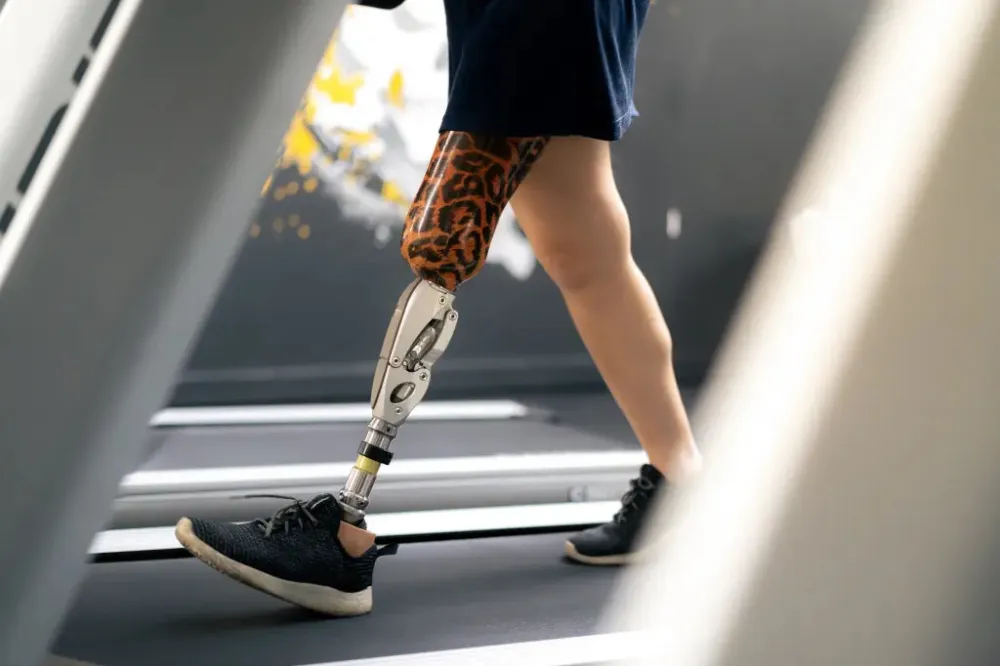
At my first prosthetic fitting, I stood there—knees trembling, heartbeat racing. I smiled at the therapist and said I was ready. Inside, I felt like a toddler learning to walk all over again. Fear pulsed through me with every tiny shift of weight. What if I fall? What if it breaks? What if I’m not strong enough?
That day, I learned something powerful—not about the leg, but about myself. I learned that walking again was not just possible, it was proof that hope and courage can outshine fear.
Why That First Step Feels So Big
Walking with a prosthetic is more than a physical act—it’s an emotional threshold. You’re learning to trust something new while carrying the weight of both your loss and your rebuild.
It’s normal to feel unsure. That first step may be shaky, but it’s also a bold move toward reclaiming your independence and strength.
Preparing the Body: Warm-Up and Mindset
Your body needs to feel safe before it can feel steady. A proper warm-up helps reduce anxiety and prepares your muscles for movement.
Try these simple practices before walking:
- Gently stretch your muscles and joints
- Do seated core and balance drills
- Close your eyes and imagine yourself walking successfully
Walking Tips That Help
Getting used to walking again takes patience and consistent practice. These early steps help your body and mind build trust in the prosthetic.
Tips for safer first steps:
- Start with support: Use parallel bars or hold your therapist’s hands
- Go slow: Focus on rhythm, not speed
- Check posture: Keep your head high, shoulders back, and lead with heel-first steps
- Use a mirror: Watch your form and correct alignment
- Breathe with intention: Inhale to lift, exhale to step
Overcoming Fear: Embrace the Wobble
Wobbling isn’t failure—it’s feedback. Your brain is relearning balance, and your muscles are building new patterns.
Instead of fighting the wobble, welcome it. It’s a sign of progress, showing you where to adjust, strengthen, and grow.
Progressing Beyond Those First Steps
Once standing feels stable and walking in place feels safe, it’s time to move forward. Think of this as widening your circle of confidence.
Try this progression:
- Take short steps toward a solid object (like a chair)
- Practice walking 3–5 feet in a clear area
- Add gentle turns and slight inclines for coordination challenges
How to Avoid Common Pitfalls
In the early stages, small mistakes can slow your progress. Avoid these common issues:
- Relying too much on rails instead of practicing balance
- Wearing worn-out or mismatched prosthetic socks
- Ignoring soreness, pain, or fatigue signals
- Comparing your pace with others instead of honoring your own journey
Prosthetic Maintenance Basics
Comfortable walking depends on both your training and your prosthetic’s condition. Regular care is essential.
Prosthetic care checklist:
- Clean and inspect sockets daily
- Check for alignment issues or loose parts weekly
- Rotate socks and liners to prevent wear
- Report any new discomfort to your prosthetist immediately
Tracking Success and Staying Motivated
Progress often shows up in small victories. Keeping track helps you see growth, even on hard days.
Ways to stay motivated:
- Log steps or walking time daily
- Celebrate wins (smooth turns, longer standing, or fewer breaks)
- Record videos or photos to visualize progress
- Share milestones with friends, family, or support groups
Mindset Matters as Much as Movement
The voice in your head walks with you every step. Speak to yourself with kindness, not judgment.
Instead of saying “I should be further along,” reframe it to “I’m doing something hard, and I’m showing up.” Recovery is not linear—it’s a spiral of resilience.
Signs You’re Ready for More
You’ll know it’s time to advance your training when:
- You can walk 5–10 minutes without frequent breaks
- You turn corners smoothly without support
- You climb 2–3 stairs with confidence
- You stand comfortably while doing daily activities
Conclusion
Walking on a prosthetic leg for the first time may feel like the most uncertain step you’ll ever take. But it’s also the beginning of something powerful. With patience, care, and courage, those wobbly steps transform into steady strides.
You don’t have to walk this journey alone—support, practice, and persistence will guide you forward. Your next step could be the one that reminds you: you are strong, capable, and moving in the right direction.
Take your next step today. You’re not just walking—you’re reclaiming your life, one brave stride at a time.
FAQs About Walking on a Prosthetic Leg
1. How long does it take to learn to walk with a prosthetic leg?
Every person’s timeline is different, but many people begin walking with support within days or weeks of fitting. Independent walking may take several months, depending on your strength, therapy, and consistency.
2. Is walking with a prosthetic painful?
Some initial discomfort is normal as your body adjusts, but it should not be painful. Persistent pain is a sign to check your prosthetic fit with your provider.
3. Can I walk without crutches or rails right away?
Most people start with support such as parallel bars or crutches. Over time, as balance improves, many transition to independent walking.
4. How do I prevent falling when learning to walk with a prosthetic?
Go slow, use proper support, keep areas clear of obstacles, and focus on posture. Practicing balance exercises and working with a therapist can reduce fall risks.
5. Do I need physical therapy to walk with a prosthetic leg?
Yes. A trained physical therapist provides guidance on posture, balance, and gait, which helps you adapt more quickly and safely.