There were nights I cried myself to sleep and still showed up the next day. After my accident, I thought I’d never feel whole again. My life was split in two, before limb loss and after. I hated how people looked at me with pity. I missed running, hugging with both arms, and even just tying my shoes. I thought the best I could do was survive. But then, everything changed.
The day I was fitted with my first microprocessor knee, I cried, not because I was sad, but because I felt something I hadn’t in months: hope. For the first time, I realized that my life wasn’t over. It was just beginning again. And prosthetic technology was going to help me write that new chapter.
The New Age of Prosthetics: More Than Just Replacement
Today’s prosthetics are not what they used to be. Gone are the days when artificial limbs were stiff, basic tools for function alone. Modern prosthetic technology focuses on restoring movement, comfort, and even sensation. It’s about helping people live more naturally, not just survive, but truly live.
New upgrades include smart sensors, AI-guided joints, and even 3D-printed sockets designed just for your body. These advancements have made prosthetics lighter, more responsive, and easier to use.
Why Technology Matters After Amputation
After limb loss, every movement requires re-learning. Your body has to shift, adjust, and rebuild itself in a new way. Old prosthetics often created more challenges than they solved, with heavy limbs, poor alignment, and painful sockets.
Now, prosthetic technology is solving those problems. It gives amputees:
- Better comfort with a personalized fit
- Faster mobility with adaptive movement
- More energy efficiency while walking or running
- Natural movement, even on stairs or uneven ground
- New levels of confidence, thanks to easier control
Smart Limbs That Think with You
One of the biggest breakthroughs in prosthetics is the rise of smart limbs. These devices use embedded microprocessors to read your movements and respond in real-time.
Some smart prosthetics even adjust automatically as you change surfaces, like moving from carpet to concrete. The sensors inside analyze how you shift your weight and update the limb’s position instantly.
Imagine walking into a building, taking stairs, sitting down, and standing back up, without needing to stop or manually adjust your prosthetic. That’s what smart limbs now make possible.
Bionic Arms with Real-Time Grip Control
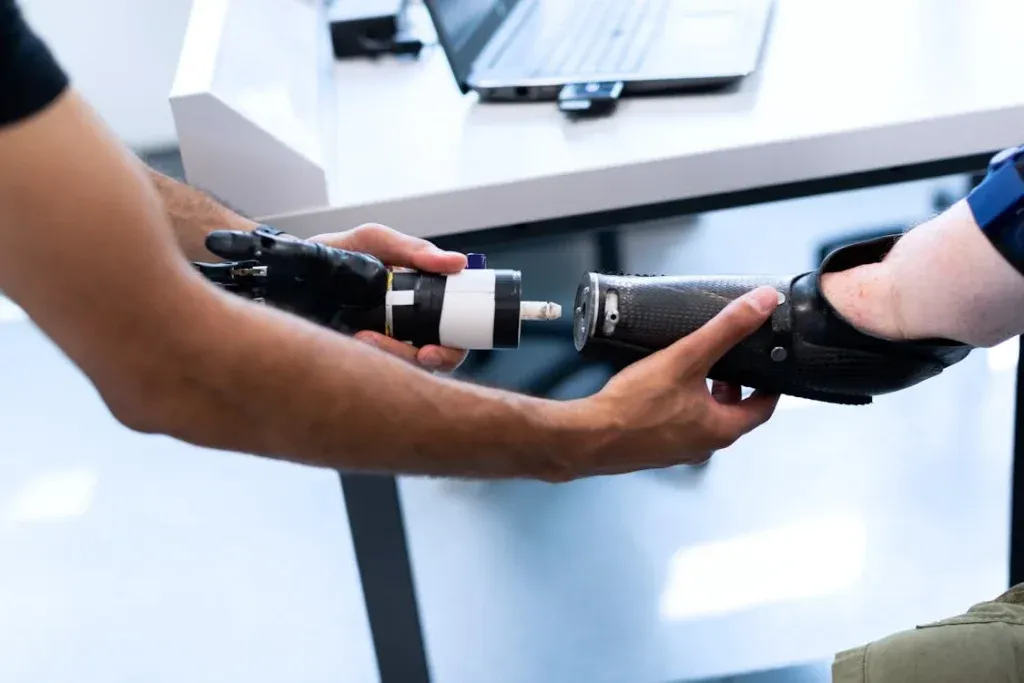
For upper-limb amputees, bionic arms have become game-changers. These advanced devices use myoelectric sensors that read signals from your muscles to control hand and finger movements.
Some modern bionic arms now offer:
- Multiple grip patterns for holding different objects
- Fast response times with natural hand movement
- Bluetooth connectivity for app-based customizations
- Lightweight frames for better balance
3D Printing: Making Prosthetics Affordable and Personal
Not every breakthrough is about electronics. 3D printing has changed the way prosthetic sockets and limbs are made. Instead of a long, expensive manufacturing process, 3D printers can create custom-fit devices in days, not weeks.
This not only cuts down costs but also gives more people access to quality care. Especially in rural or low-resource areas, 3D printing is allowing amputees to get the tools they need faster.
The Return of Touch: Sensory Feedback in Prosthetics
One of the most exciting areas in prosthetic technology is sensory feedback. These systems give users the ability to feel pressure, temperature, or texture through their prosthetic limbs.
How? By connecting sensors on the limb to nerves or even brain signals. Some devices use vibration to signal grip strength. Others mimic the way skin feels on different surfaces.
This is still a developing field, but its impact is huge. Sensory feedback could help reduce phantom pain, improve daily tasks, and even make touch emotionally meaningful again.
Prosthetics for Kids: Lighter, Faster, More Fun
Children with limb loss need more than function; they need to play, run, explore, and grow. Thankfully, newer prosthetics for children are now:
- Lightweight and easier to wear for long hours
- Designed to grow with the child
- Styled with fun colors, themes, and personalization
- Built for both function and activity (like swimming or sports)
How Do You Choose the Right Prosthetic?
With so many upgrades, it’s natural to feel overwhelmed. That’s where your prosthetist comes in. The right device depends on your body, lifestyle, and goals.
Key questions to ask:
- What daily activities matter most to me?
- Will I need different limbs for work, exercise, or rest?
- How important is sensory feedback or joint movement?
- Can I maintain this device long-term?
- What’s covered by my insurance or healthcare plan?
Barriers Still Exist, But So Does Progress
While we’ve made huge steps in technology, accessibility is still a challenge. Not every amputee can afford high-end limbs or live near an advanced clinic.
But this is changing too. Nonprofits, grants, and tech startups are working hard to close that gap. 3D printing, open-source prosthetic designs, and community-led solutions are rising around the world.
Conclusion
Amputation doesn’t end your story; it simply shifts the path. And thanks to breakthroughs in prosthetic technology, that new path can be filled with movement, confidence, and joy.
From smart limbs to sensory upgrades and 3D-printed solutions, prosthetic technology is evolving fast, and bringing more people back into life fully and freely.
If you’re wondering what comes next after limb loss, you’re not alone. Explore your options, ask questions, and take one step at a time. The right technology can help you walk forward, stronger than ever.